How to Cut Down or Quit Alcohol: Six Steps to Recovery
Learn how to cut down or quit alcohol with six practical steps, faith-based encouragement, professional treatment options, and strategies to rebuild trust, protect your marriage, and create lasting recovery.
Prefer to watch?
How to Cut Down or Quit Alcohol: A 6-Step Action Plan for Healthier Relationships and Lasting Recovery
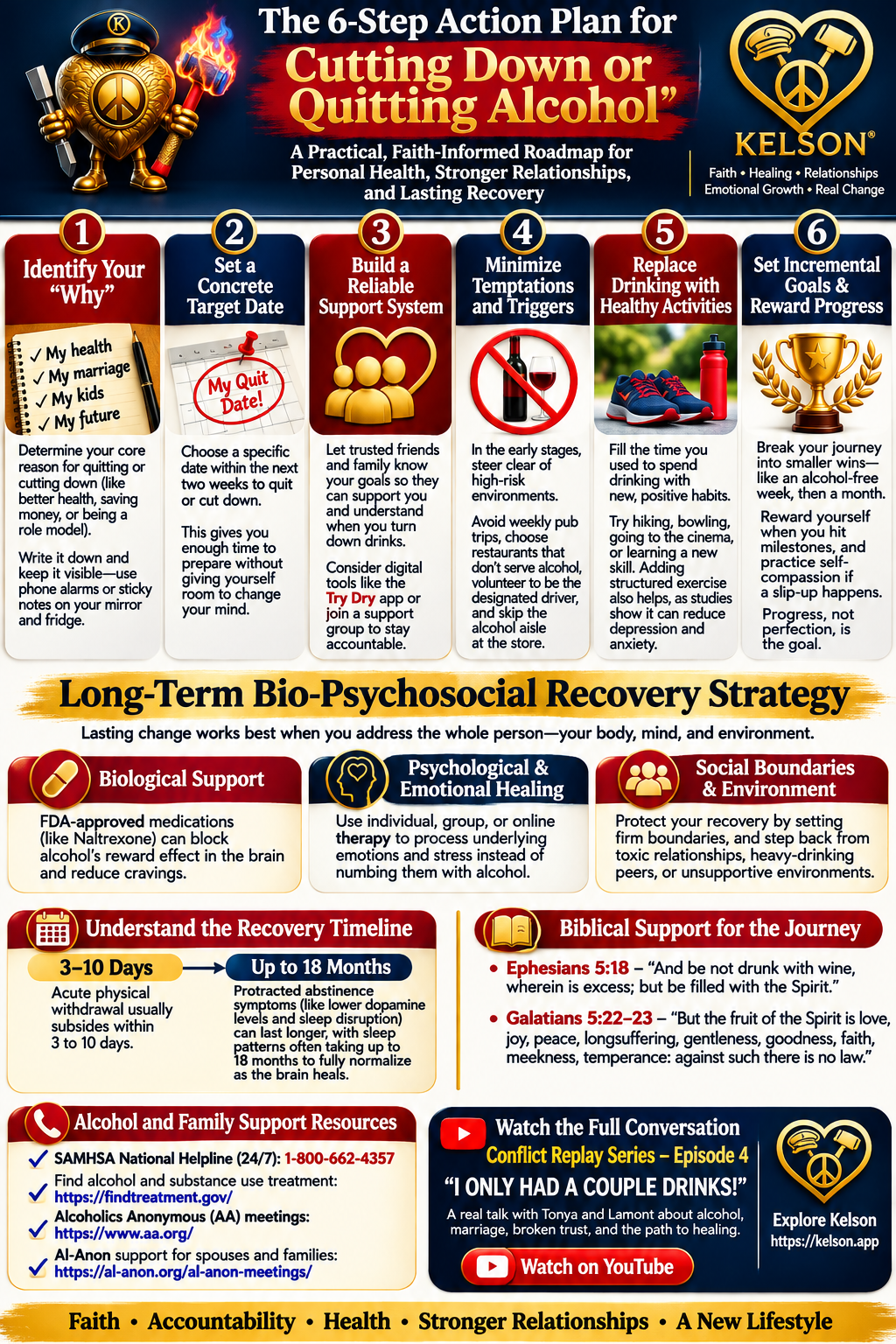
The Kelson 6-Step Action Plan for Cutting Down or Quitting Alcohol
Introduction: When Drinking Starts Costing More Than Money
"I only had a couple drinks!"
It's a statement many people have heard in their homes, relationships, and marriages. Sometimes it's true. Other times, those few drinks are part of a larger pattern that nobody wants to discuss.
But here's a question worth considering: What happens when drinking starts costing you more than money?
What happens when it affects your marriage, damages trust, creates emotional distance, changes your behavior, or leaves your spouse feeling unheard and unimportant?
Alcohol-related problems don't always begin with an obvious crisis. Sometimes they develop gradually. What starts as an occasional drink to relax can become a regular way to deal with stress, disappointment, frustration, loneliness, or emotional pain.
And while someone may believe their drinking isn't hurting anybody, the people closest to them may be experiencing something very different.
At Kelson, we believe personal growth requires more than recognizing unhealthy patterns. It requires taking responsibility and developing the skills to change them.
Learning how to cut down or quit alcohol can be an important step toward better physical health, emotional stability, healthier relationships, and a more peaceful home.
This isn't about shaming anyone who drinks. It's about recognizing when a behavior has become harmful and having the courage to address it.
In this guide, we'll explore six practical steps for changing drinking habits, the importance of professional treatment, and how individuals and couples can begin rebuilding their lives.
What You'll Learn: Article Outline
| Section | What You'll Discover |
|---|---|
| 1. Understanding alcohol's impact | How drinking affects individuals and relationships |
| 2. Recognizing unhealthy patterns | Warning signs that drinking may be becoming a problem |
| 3. The six-step action plan | Practical steps for making a change |
| 4. Long-term recovery | Biological, psychological, and social support |
| 5. Alcohol and marriage | Rebuilding trust and emotional safety |
| 6. Faith and personal growth | Applying biblical wisdom to accountability |
| 7. Recovery resources | Where to find professional and family support |
| 8. Frequently asked questions | Answers to common recovery questions |
1. Understanding How Alcohol Affects Your Life and Relationships
Alcohol doesn't affect only the person drinking. Its effects can reach into the home, workplace, friendships, finances, and marriage.
One of the biggest challenges is that people don't always recognize the connection between their drinking and the problems developing around them.
Someone may continue working, paying bills, taking care of responsibilities, and showing up for family activities. From the outside, everything may appear normal.
However, functioning in daily life doesn't automatically mean alcohol isn't causing harm.
Alcohol and Emotional Availability
A healthy relationship requires emotional availability.
That means being present, listening, communicating, showing affection, and being able to work through difficult conversations.
When drinking becomes a regular coping strategy, it can interfere with those responsibilities.
- One spouse may become less emotionally available.
- Arguments may become more frequent.
- Important conversations may be avoided.
- Promises made while sober may not be followed through.
- The other spouse may feel like they're competing with alcohol for attention.
- Family members may begin walking on eggshells.
Over time, these experiences can weaken the emotional connection between partners.
The Difference Between Drinking and a Drinking Problem
Not everyone who drinks has an alcohol use disorder. However, the number of drinks alone doesn't tell the entire story.
It's important to look at patterns and consequences.
Ask yourself:
- Have I tried to reduce my drinking but struggled to follow through?
- Do I drink more than I originally planned?
- Do I become defensive when someone expresses concern?
- Am I using alcohol to escape difficult emotions?
- Has drinking created conflict in my marriage?
- Have I continued drinking despite knowing it's affecting my health or relationships?
These questions aren't a diagnosis. They're opportunities for honest reflection.
According to the National Institute on Alcohol Abuse and Alcoholism (NIAAA), alcohol use disorder can range from mild to severe and is assessed using specific symptoms and professional evaluation.
Why Denial Can Keep People Stuck
Sometimes the biggest obstacle to change isn't the alcohol itself. It's the unwillingness to acknowledge what alcohol is doing.
Statements such as these can become barriers:
- "I only drink on weekends."
- "I pay all the bills."
- "I don't drink as much as other people."
- "I can stop whenever I want."
- "My spouse is making a big deal out of nothing."
The question isn't whether someone else drinks more. The question is whether your drinking is creating problems in your life.
Honest accountability begins when we stop comparing our behavior to someone else's and start examining our own.
2. Recognizing When It's Time to Make a Change
One of the most important steps in recovery is recognizing that something needs to change.
You don't have to lose your job, destroy your marriage, or experience a major health crisis before taking action.
In fact, addressing unhealthy patterns early may prevent greater damage.
Signs That Drinking May Be Becoming a Problem
- Drinking becomes your primary way to relax. You begin relying on alcohol whenever you're stressed, frustrated, overwhelmed, or disappointed.
- You struggle to stop once you start. You intend to have one or two drinks but regularly consume more than planned.
- Your spouse or family expresses concern. People close to you repeatedly mention changes in your behavior or the impact drinking is having on the household.
- You become defensive when questioned. Instead of discussing the concern, you focus on proving that nobody has the right to question your choices.
- You hide or minimize your drinking. You may avoid discussing how much you drink or become uncomfortable when someone asks about it.
- Alcohol interferes with responsibilities. You may miss important events, neglect responsibilities, or become less dependable.
- You experience withdrawal symptoms. Shaking, sweating, nausea, anxiety, insomnia, or a racing heart when alcohol wears off can indicate physical dependence.
These symptoms deserve medical attention.
Don't Wait Until Everything Falls Apart
There is a common misconception that someone must hit rock bottom before they can receive help.
That's not true.
You can seek help because you want to protect your marriage. You can seek help because you want better health. You can seek help because you're tired of repeating the same cycle.
You don't have to wait for a crisis to decide that your life deserves something better.
3. The Six-Step Action Plan for Cutting Down or Quitting Alcohol
Making a change requires more than good intentions. It requires a plan, consistent action, accountability, and appropriate support.
The following six steps provide a practical starting point.
Step 1: Identify Your Why
Before changing your drinking habits, identify why the change matters.
Your motivation needs to be personal.
- Improve your physical health.
- Become more emotionally available to your spouse.
- Be a better example for your children.
- Save money.
- Improve your mental and emotional well-being.
- Stop repeating unhealthy family patterns.
- Develop healthier ways to handle stress.
- Restore trust in your marriage.
Write down your reasons. Keep them somewhere visible. Put them on your refrigerator, save them as a phone reminder, or place them near your workspace.
When motivation becomes difficult, revisit your reasons.
Your why should be bigger than your temporary desire to drink.
It's also important to understand that motivation alone isn't treatment. If you have physical dependence, professional medical guidance may be necessary before reducing or stopping alcohol.
Step 2: Set a Concrete Target Date
A goal without a plan can easily become another promise you never fulfill.
Choose a specific date to begin making changes.
For someone whose drinking does not involve physical dependence or withdrawal risk, a planned alcohol-free period or reduction goal may help create structure.
However, if you've been drinking heavily or regularly, consult a healthcare professional before stopping suddenly. Alcohol withdrawal can be dangerous and sometimes life-threatening.
Once you've discussed a safe plan, identify what success will look like.
- Attending a medical appointment.
- Beginning counseling.
- Removing alcohol-related social triggers.
- Participating in a recovery support group.
- Establishing healthier evening routines.
Make your goals measurable. Instead of saying, "I'm going to do better," identify the specific actions you'll take.
Step 3: Build a Reliable Support System
Recovery doesn't have to happen in isolation.
Tell trusted people about your goals. This might include your spouse, a family member, a close friend, a counselor, or a recovery support group.
A reliable support system can help you remain accountable when motivation becomes difficult.
Consider these options:
- Individual counseling.
- Group therapy.
- Alcohol recovery programs.
- Mutual-support meetings.
- Medical treatment.
- Online recovery communities.
Apps and digital tools may also help with reflection and accountability. The Try Dry app is one example of a tool people can explore when tracking drinking habits.
However, digital tools are not substitutes for medical treatment when dependence or withdrawal is present.
Remember: Accountability isn't about having someone constantly monitor you. It's about developing an environment where honesty, responsibility, and progress are encouraged.
Step 4: Minimize Temptations and Triggers
Your environment can influence your decisions.
If certain places, people, or situations repeatedly lead you toward drinking, it's important to recognize those patterns.
For example:
- Weekly trips to bars.
- Social gatherings centered around alcohol.
- Friends who pressure you to drink.
- Keeping alcohol readily available at home.
- Drinking whenever you're frustrated.
- Using alcohol to fall asleep.
Consider changing the environment around you.
You might choose restaurants without alcohol-centered activities, suggest alcohol-free gatherings, or spend time with people who respect your recovery goals.
You may also need to establish boundaries with friends who don't support your decision.
That doesn't mean you have to end every friendship. It means you must recognize which environments support your goals and which ones make them harder.
Step 5: Replace Drinking With Healthy Activities
Removing a behavior without replacing the time and purpose it served can leave a difficult gap.
Think about what drinking represents in your routine.
Is it your way to unwind after work? Is it how you socialize? Is it how you avoid uncomfortable emotions?
Find healthier ways to meet those needs.
- Walking or hiking.
- Bowling.
- Going to the movies.
- Exercising.
- Reading.
- Learning a new skill.
- Spending intentional time with your spouse.
- Participating in community activities.
- Developing a consistent evening routine.
Exercise can support physical and emotional well-being, but it shouldn't be viewed as a replacement for addiction treatment.
You can also develop emotional regulation skills that help you respond to stress without immediately reaching for alcohol.
The goal is to build a lifestyle that gives you healthier ways to experience enjoyment, connection, and peace.
Step 6: Set Incremental Goals and Reward Progress
Lasting change happens through consistent effort.
Instead of focusing only on a final destination, recognize the smaller steps that move you forward.
Your milestones might include:
- Completing an initial medical assessment.
- Attending your first counseling session.
- Joining a recovery support group.
- Developing a healthy evening routine.
- Improving communication with your spouse.
- Following your treatment plan.
- Reaching an agreed recovery milestone.
Celebrate meaningful progress.
You might use the money previously spent on alcohol to enjoy a family activity, purchase something useful, or plan a special experience.
Most importantly, practice self-compassion.
If a setback occurs, don't use it as an excuse to abandon the entire process. A setback deserves attention, honesty, and an adjustment to the recovery plan.
Progress is about continuing to take responsibility, not pretending you'll never face another challenge.
4. Long-Term Recovery: Addressing the Whole Person
One of the biggest mistakes people make is thinking recovery is simply about stopping alcohol consumption.
Stopping or reducing drinking may be an important goal, but lasting recovery often requires addressing the underlying physical, emotional, psychological, and social factors that contribute to the behavior.
A comprehensive recovery strategy considers the whole person.
Biological Support: Taking Care of Your Body
Alcohol affects the brain and body.
For individuals experiencing alcohol use disorder, medical treatment may be an important part of recovery.
Healthcare professionals can evaluate withdrawal risks, physical health concerns, and appropriate treatment options.
There are FDA-approved medications that can help people with alcohol use disorder.
- Naltrexone: Can reduce alcohol cravings and the rewarding effects associated with drinking.
- Acamprosate: Can help people maintain abstinence.
- Disulfiram: Creates an unpleasant reaction when alcohol is consumed and may be appropriate for certain individuals.
These medications aren't appropriate for everyone. A healthcare professional must evaluate medical history, other medications, and treatment goals.
It's also important to understand that medications used to treat alcohol use disorder are different from medications used to manage acute alcohol withdrawal.
Never attempt to manage potentially dangerous withdrawal symptoms without medical guidance.
Psychological and Emotional Healing
Sometimes alcohol becomes a way to avoid emotions that feel difficult to manage.
People may drink because they're experiencing:
- Stress.
- Anxiety.
- Grief.
- Loneliness.
- Relationship conflict.
- Unresolved emotional pain.
- Feelings of inadequacy.
- Difficulty managing disappointment.
If these issues aren't addressed, the desire to escape through alcohol may continue.
Professional counseling can help individuals identify unhealthy patterns and develop healthier coping skills.
Evidence-based approaches include cognitive behavioral therapy, motivational enhancement therapy, and other appropriate behavioral treatments.
The purpose isn't simply to discuss drinking. It's to develop the skills necessary to respond differently when life becomes difficult.
Social Boundaries and Environmental Change
Your environment matters.
If you're surrounded by people who encourage excessive drinking, dismiss your recovery goals, or repeatedly expose you to situations that threaten your progress, you may need stronger boundaries.
- Declining invitations to alcohol-centered events.
- Limiting time with people who pressure you to drink.
- Asking family members to support recovery goals.
- Creating alcohol-free spaces at home.
- Seeking friendships that encourage healthy choices.
Boundaries aren't punishments. They're decisions about what you will allow into your life while working toward healthier patterns.
Understanding the Recovery Timeline
Recovery doesn't follow one universal timeline.
Acute withdrawal symptoms may develop after someone who is physically dependent stops drinking. Symptoms can range from mild to severe.
Some people experience tremors, sweating, nausea, anxiety, and difficulty sleeping. Severe withdrawal can involve seizures, hallucinations, and delirium tremens.
Withdrawal can become life-threatening. Anyone who drinks heavily or may be physically dependent should seek medical advice before stopping.
After acute withdrawal, recovery continues. Sleep, mood, concentration, stress management, and emotional stability may take additional time to improve.
The important thing is to avoid treating detoxification as the entire recovery process.
Detox addresses withdrawal. Long-term treatment addresses the ongoing challenges of recovery.
5. Alcohol and Marriage: Rebuilding Trust and Emotional Safety
Alcohol-related problems can create a painful cycle in relationships.
One spouse drinks. The other expresses concern. The person drinking becomes defensive. An argument follows. Eventually, the issue gets pushed aside.
Then it happens again.
Over time, the repeated cycle can damage trust.
Why Paying the Bills Isn't the Whole Story
Providing financially for your household is important. However, financial responsibility doesn't replace emotional responsibility.
A spouse may appreciate the bills being paid while still feeling emotionally disconnected.
Marriage requires more than providing financially. It requires presence, communication, affection, honesty, and mutual respect.
If drinking is affecting those areas, the issue deserves attention.
The Emotional Experience of the Spouse
The spouse of someone struggling with alcohol may experience:
- Disappointment.
- Loneliness.
- Anxiety.
- Frustration.
- Loss of trust.
- Emotional exhaustion.
- Fear about the future.
They may begin questioning whether their concerns are valid.
They may also feel responsible for monitoring the other person's behavior.
That isn't a healthy long-term arrangement.
The person drinking must take responsibility for their choices, while the spouse deserves support for their own emotional well-being.
Family counseling and support groups such as Al-Anon can provide valuable resources.
How Couples Can Begin Rebuilding Trust
Rebuilding trust requires consistent action.
- Acknowledge the impact. Don't focus only on your intentions. Recognize how your behavior has affected your spouse.
- Stop minimizing the concern. Statements like "It wasn't that bad" or "You're overreacting" prevent meaningful communication.
- Take responsibility. Acknowledge your choices without blaming your spouse, stress, or other people.
- Seek appropriate help. Professional treatment may be necessary to address alcohol use and its underlying causes.
- Rebuild through consistency. Trust develops through repeated actions that demonstrate honesty and reliability.
- Allow time for healing. Your spouse may need time to process what has happened. Don't demand immediate forgiveness simply because you've decided to make a change.
A healthier marriage requires both partners to feel safe, heard, and respected.
6. Faith, Accountability, and the Journey Toward Personal Growth
At Kelson, we believe spiritual growth should influence how we live, how we respond, and how we treat the people connected to us.
Faith isn't simply about hearing the Word. It's also about becoming doers of the Word.
The Bible provides wisdom that can encourage self-control, accountability, and healthier choices.
Ephesians 5:18: Making Wise Choices
"Be not drunk with wine, wherein is excess; but be filled with the Spirit."
Ephesians 5:18 (KJV)
This verse offers an opportunity to reflect on what influences our decisions.
Are we allowing unhealthy habits to control our choices? Are we using substances to escape emotions instead of developing healthier ways to address them? Are our actions supporting the kind of life and relationships we say we want?
Spiritual reflection can help individuals examine these questions honestly.
Galatians 5:22–23: Developing the Fruit of the Spirit
Galatians 5:22–23 identifies the fruit of the Spirit, including:
- Love.
- Joy.
- Peace.
- Longsuffering.
- Gentleness.
- Goodness.
- Faith.
- Meekness.
- Temperance.
Temperance speaks to self-control.
However, self-control shouldn't be confused with the idea that someone can overcome physical dependence through willpower alone.
Professional medical care and treatment are not signs of weak faith. Seeking help can be an expression of responsibility and wisdom.
What Is Not Transferred Will Be Transformed
One of the important principles behind personal and relational growth is that unhealthy patterns don't have to become family traditions.
When people refuse to examine harmful behaviors, those behaviors can affect the next generation.
Children observe how adults handle stress, conflict, emotions, and relationships.
Changing unhealthy patterns creates an opportunity to demonstrate something different.
You can teach your children that asking for help is courageous, taking responsibility matters, and personal growth is a lifelong process.
Faith, professional care, accountability, and healthy relationships can work together.
7. Recovery Resources: You Don't Have to Do This Alone
If alcohol is creating problems in your life or marriage, professional support is available.
SAMHSA National Helpline
The Substance Abuse and Mental Health Services Administration provides free, confidential treatment referral and information services.
Call: 1-800-662-4357
Available 24 hours a day, seven days a week.
Find Alcohol Treatment
FindTreatment.gov helps individuals and families locate substance use and mental health treatment services.
Alcoholics Anonymous
Alcoholics Anonymous offers peer-support meetings for individuals who want to stop drinking.
Find Alcoholics Anonymous Meetings
Al-Anon Family Groups
Al-Anon provides support for people affected by someone else's drinking.
This can be particularly helpful for spouses and family members who need their own support system.
Professional Medical and Counseling Support
A physician, addiction specialist, or licensed mental health professional can help determine the appropriate treatment approach.
If someone develops severe withdrawal symptoms, including seizures, hallucinations, or severe confusion, seek emergency medical attention.
8. How Kelson Supports Personal and Relationship Growth
At Kelson, our mission is to empower coachable singles and couples with the skills and tools needed to transform conflicts into connections and build healthier relationships.
We believe meaningful change begins with awareness.
You must first recognize the patterns that are affecting your life before you can begin developing healthier ones.
Kelson encourages individuals to examine their thoughts, behaviors, emotional responses, boundaries, and relationship patterns.
Through guided reflection and personal growth tools, individuals can become more intentional about how they respond to everyday challenges.
Our Focus Includes:
- Identifying unhealthy personal patterns.
- Developing emotional awareness.
- Strengthening communication skills.
- Understanding boundaries.
- Practicing accountability.
- Building healthier relationship habits.
- Supporting spiritual and personal maturity.
Moving Beyond Hearing the Word to Becoming Doers
Many people hear good advice every day.
They read books, listen to podcasts, attend church, and watch educational videos.
But hearing information and applying it are two different things.
That's why Kelson emphasizes practical growth.
It's not simply about knowing what healthy relationships look like. It's about developing the habits and skills that help create them.
Explore Kelson:
Important: Kelson is a personal and relationship growth resource. It is not a substitute for addiction treatment, medical care, or professional mental health services.
9. Frequently Asked Questions About Cutting Down or Quitting Alcohol
1. How do I know if I need to quit drinking?
Consider whether drinking is affecting your health, relationships, responsibilities, emotional well-being, or ability to control your behavior. If you've repeatedly tried to cut down but cannot, or drinking continues despite negative consequences, speak with a healthcare professional about an evaluation.
2. Can I quit drinking on my own?
Some people can change their drinking habits without intensive treatment. Others need professional support. If you've been drinking heavily or may be physically dependent, stopping suddenly can cause dangerous withdrawal symptoms. Speak with a healthcare professional before stopping.
3. How long does alcohol withdrawal last?
There isn't one timeline that applies to everyone. Withdrawal symptoms vary depending on drinking history, physical health, and other factors. Some symptoms can be serious or life-threatening. Medical professionals can assess withdrawal risk and determine the appropriate level of care.
4. Can alcohol damage a marriage even if the person pays the bills?
Yes. Financial responsibility doesn't automatically create emotional safety. Alcohol-related behavior can affect communication, trust, intimacy, reliability, and emotional availability. Both financial and emotional responsibility matter in a healthy marriage.
5. Can a marriage recover after alcohol-related problems?
Yes, many couples can work toward rebuilding their relationship. However, recovery requires accountability, consistent behavioral change, honest communication, and appropriate professional support. The spouse who has been hurt should not be pressured to trust immediately.
6. Are there medications that help people stop drinking?
Yes. FDA-approved medications include naltrexone, acamprosate, and disulfiram. A healthcare professional can explain which options may be appropriate based on individual health and treatment goals.
7. What should I do if my spouse refuses to get help?
You cannot force another adult to accept treatment. However, you can establish boundaries, seek counseling, attend a family support group, and protect your own emotional and physical well-being. You can encourage change without taking responsibility for someone else's decisions.
8. Can faith help someone recover from alcohol problems?
Faith can provide encouragement, purpose, spiritual connection, and motivation. However, faith should work alongside appropriate medical and professional treatment when needed. Seeking help is not a failure of faith.
9. What is the first step toward recovery?
Start with honest recognition. Acknowledge what's happening, speak with a qualified healthcare professional about safe next steps, and identify the support you need. You don't have to figure everything out today. You do need to take the next responsible step.
Conclusion: Your Next Decision Can Change Your Direction
Sometimes the most important conversation is the one we've been avoiding.
Alcohol-related problems can affect physical health, emotional well-being, marriage, parenting, and family relationships.
But recognizing a problem doesn't mean your story has to end there.
You can make a different decision.
You can seek professional help. You can establish healthier boundaries. You can learn to manage emotions differently. You can rebuild trust through consistent actions.
And if you're the spouse watching someone you love struggle, remember that you deserve support, too.
At Kelson, we believe personal growth requires awareness, accountability, and action.
Don't just hear what needs to change. Begin putting the necessary changes into practice.
What Is Not Transferred Will Be Transformed.
You don't have to carry unhealthy patterns into another generation.
Start building a healthier foundation today.
Your Kelson Action Challenge
Take a few minutes to reflect on these questions:
- What role does alcohol currently play in my life or relationship?
- What patterns have I been avoiding?
- What changes would improve my physical and emotional well-being?
- What support do I need to move forward?
- What is one responsible action I can take today?
Write your answers down. Be honest with yourself.
Remember, progress doesn't begin with pretending everything is okay. It begins with being willing to acknowledge what needs attention.
Power Word: COURAGE
Power Number: 6
Kelson: Build a stronger foundation. Create healthier patterns. Transform your relationships.
Visit Kelson to explore tools for personal growth, spiritual maturity, and healthier relationships.
Watch: Conflict Replay Series – Episode 4
"I ONLY HAD A COUPLE DRINKS!"
What happens when drinking starts costing more than money?
Join Tonya and Lamont for an honest conversation about alcohol, marriage, broken trust, denial, emotional safety, and the importance of getting help.
Additional Video Resource:
Watch the Additional Recovery Video
Don't forget to like, share, and subscribe to Visions of Love & Marriage "Beyond The Vows."
Your next conversation could help someone recognize a pattern they've been avoiding.
Keep Reading
All guides
- test
- 7 Best Prayer Group Apps for Churches and Small Groups
- Couples Journal: 7 Best Shared Journal Apps for Couples
- Bible Study App for Women: 7 Top Picks for Deeper Faith
- Best Bible Study App for Women: Top Picks for Deepening Faith
- Bible Study Apps for Couples: Grow in Faith Together
- Couples Journal: A Shared Practice for Growing Together
- Reflection Journal App: Guided Prompts for Relationships and Faith
- Anxiety Checklist App Alternatives: Christian Apps for Mood Tracking
- Best Christian Sleep App for Bedtime Scripture, Anxiety, and Restful Nights (2026)
- Best Christian Fasting App for Prayer, Lent, and Spiritual Breakthrough
- Best Christian Apps for Women: 12 Faith-Filled Picks for Every Season
- Best Christian Affirmations App: 8 Biblical Picks for Daily Scripture (2026)
- Best Scripture Memory App for Kids, Adults, and Beginners (2026)
- Best Christian Meditation App for Sleep, Anxiety, and Scripture Reflection (2026)
- Best Christian App for Community and Sharing: 7 Picks for Churches and Friends
- Best Devotional App for Churches: 7 Picks for 2026
- Best Prayer Journal App for Churches and Small Groups: 7 Picks for 2026
- Best Christian Anxiety Apps: 7 Faith-Based Picks for a Calmer Mind
- Best AI Journaling Apps for Christians: 7 Faith-First Picks (2026)
- Weekly Marriage Check-In: 25 Questions That Keep You Connected: marriage check-in questions
- Best Gratitude Journal for Couples Apps in 2026
- What Does the Bible Say About Polygamy? Truth Over the Crowd
- Best Bible Study Apps for Churches and Small Groups in 2026
- Prayer Journal Prompts: 60 Prompts to Deepen Your Quiet Time with God
- Best Devotional Apps in 2026: 9 Daily Devotionals Compared
- AI Journals That Write Back: Enhance Your Reflection Process: ai journal that writes back
- AI Journaling Apps for Consistency: Daily Reflection Made Easy
- AI Journal That Writes Back: How Reflective AI Journaling Actually Works
- Best Christian Gratitude Apps for Churches and Small Groups in 2026: christian gratitude app for churches
- How to Communicate With a Spouse Who Shuts Down: 7 Faith-Grounded Steps
- Christian Accountability App: How to Choose One That Actually Helps
- How to Pray Together as a Couple Without It Feeling Awkward
- How to Build a Journaling Habit That Actually Sticks: A 21-Day Plan
- Journaling for Anxiety: How to Track Triggers and Calm a Racing Mind
- How to Practice Marriage Journaling Without Blaming Your Spouse
- How Do You Journal Together as a Couple? A Simple Practice for Busy Couples: couples journaling
- Couples Journaling Prompts: 60 Questions to Deepen Connection
- Best Couples Journaling Apps in 2026: Top Picks for Better Communication
- Best Marriage Journal Apps in 2026: Top Picks for Couples to Communicate Better
- Best Bible Journaling Apps in 2026: Top Picks for Scripture Study
- Best Devotional App for Couples in 2026: Top Picks for Growing in Faith Together
- Best Bible Study Apps in 2026: Top Picks for Deeper Scripture Engagement
- Best Prayer Journal Apps in 2026: Top Picks for a Deeper Faith
- Best Gratitude Journal Apps in 2026: Top Picks for Faith & Growth
- The Best AI Journaling Apps in 2026: Smart Journaling Compared
- Bible Journaling Apps: The Best Options for Christian Couples in 2026
- Journaling Apps: The Complete 2026 Guide to Choosing One That Sticks
- How to Set Healthy Boundaries in Relationships: A Biblical Guide
- 10 Essential Steps to Prepare for a God-Honoring Marriage
- 10 Practical Ways to Cultivate Emotional Maturity in Relationships
- Top Features to Look for in an Anxiety Tracking App
- How to Communicate Better in Marriage Using Journaling
- How to Start Bible Journaling as a Couple: A Step-by-Step Guide
- How to Use Journaling for Healing After Betrayal
- How to Develop Emotional Maturity in Relationships
- 7 Steps to Heal After Betrayal in Your Relationship
- 10 Practical Tips on How to Communicate Better in Marriage
- Best Journal Apps of 2026
- Faith-Based Marriage Help: 7 Daily Practices That Actually Work
- How to Build Emotional Resilience: A 30-Day Framework
- Best Apps for Anxiety and Mood Tracking in 2026
- The Best Couples Journal Apps for Stronger Relationships
- How to Start Journaling for Mental Health: A Beginner's Guide
- Journal Prompts for Emotional Healing After a Breakup
- AI Journaling Apps in 2026: The Best AI Journal Apps Compared
- 5 Best Christian Journal Apps for Faith-Based Reflection
- Best Journaling Apps in 2026: 10 Top Picks Compared for Personal Growth
- Christian Dating Apps vs. Real Relational Growth: What Actually Works
Put This Into Practice
Kelson gives you the tools to actually do this work — AI coaching, guided journaling, and a 30-day journey built for real transformation.
Start Your Free 30-Day Journey